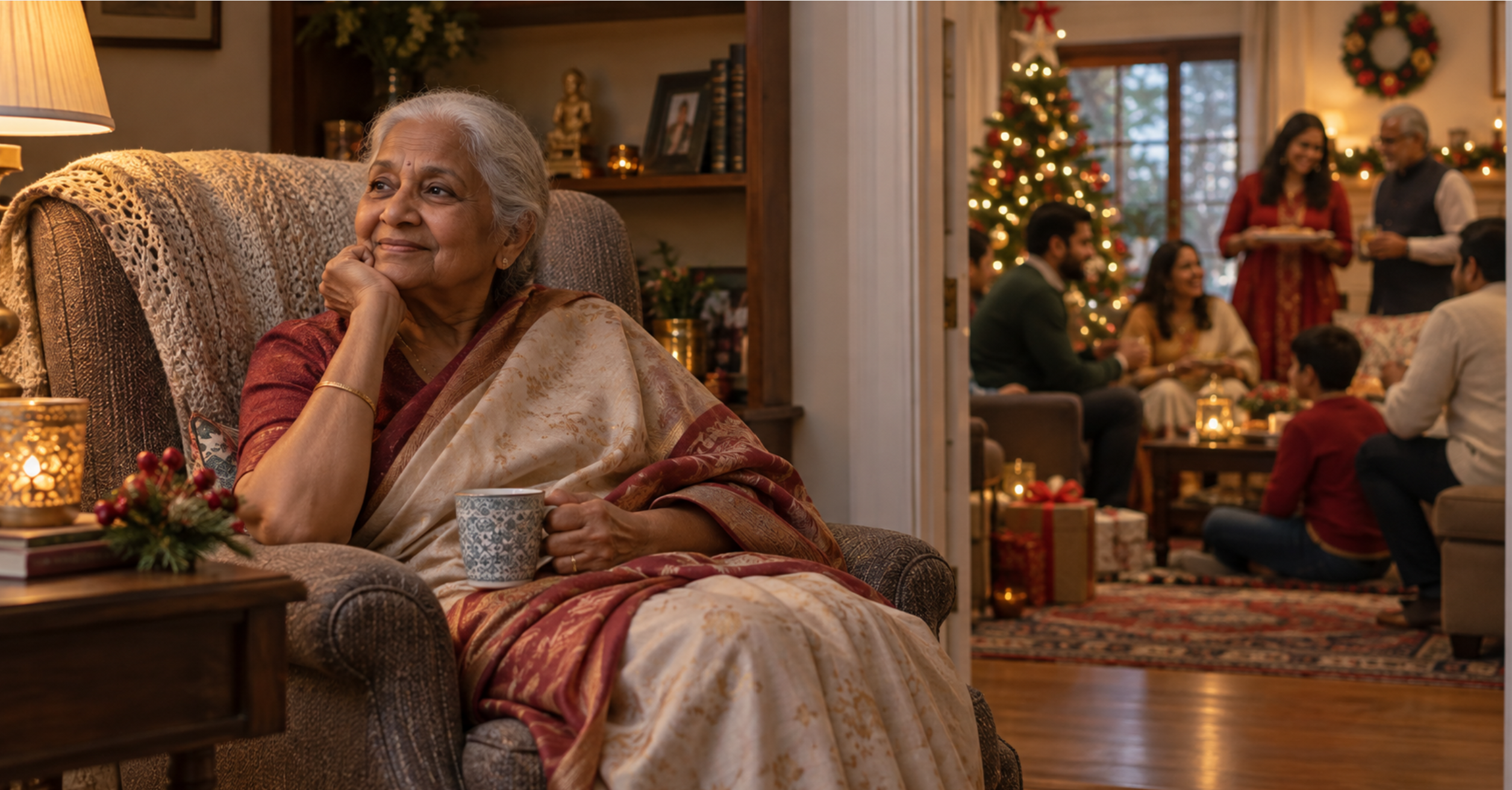
Thanksgiving may have brought a house full of family together yesterday. Now comes the rest of Thanksgiving weekend, followed quickly by Christmas, Hanukkah, New Year’s celebrations, and other December gatherings. For someone living with Alzheimer’s disease or another dementia, all that welcome activity can also become overwhelming.
The Alzheimer’s Association specifically warns that large social gatherings, houseguests, simultaneous conversations, changes in routine, noise, and unfamiliar activity can be difficult for people with dementia.[1-3]
A little planning can help an older loved one participate in the holidays without expecting them to keep up with everyone else.
Why a Happy Gathering Can Become Too Much
Dementia reduces the brain’s ability to process new information and stimulation. A room full of conversations, children moving around, music playing, televisions running, unfamiliar visitors, and changes in the usual schedule can create more information than the person can comfortably manage.[2]
The result may be:
Anxiety or restlessness
Irritability or agitation
Withdrawal from the gathering
Difficulty following conversations
Repeating questions more frequently
Becoming confused about who people are
Wanting to leave the room or go “home,” even when already at home
The Alzheimer’s Association notes that even familiar people can become overwhelming when they arrive as part of a large crowd.[3]
Preserve Some of the Ordinary Day
Holiday traditions do not have to disappear, but familiar routines can provide important anchors. The Alzheimer’s Association recommends maintaining the person’s normal routine as much as possible during holiday preparations and visits.[1] Regular waking, meals, medications, rest, and bedtime can help provide continuity when everything else around the person has changed. If Mom normally eats lunch at noon, takes an afternoon rest, and eats dinner at 5:30, Christmas Day may go better if those basic parts of her schedule remain recognizable. The rest of the family can have appetizers at 2:00 and dinner at 7:00. Mom does not necessarily have to follow the same schedule.
Give Them Somewhere Quiet to Go
One of the simplest holiday preparations may be setting aside a comfortable quiet space. It does not have to resemble a special “dementia room.” A familiar bedroom, den, or quiet corner of the house can provide a retreat when the gathering becomes tiring. Keep it comfortable and relatively free of noise and activity. A familiar chair, photographs, favorite music played softly, or another familiar object may help. The Alzheimer’s Association recommends reducing noise and background distractions and, when necessary, moving the person to a quieter place.[2] A family member can sit nearby without demanding conversation. Sometimes 20 quiet minutes away from the gathering is enough to make another visit to the family room enjoyable.
Reduce Competing Noise
Several conversations happening at once can be particularly difficult for someone with dementia.[1] Turn off a television that nobody is actually watching. Avoid having music, television, and several conversations competing at the same time. When speaking directly to the person, allow time for an answer rather than having several relatives jump into the conversation. Smaller groups may also work better. The Alzheimer’s Association suggests that someone who finds a large gathering overwhelming may be able to interact successfully with fewer people at a time.[4] That could mean grandchildren visiting Grandma two or three at a time rather than surrounding her all at once.
Let Participation Be Optional
An older adult with dementia does not need to attend every meal, gift exchange, photograph, game, religious observance, and family activity. Look for the parts of the holiday that still bring pleasure. Someone might enjoy folding napkins, looking through old photographs, listening to familiar seasonal music, helping place ornaments, or sitting with the family for dessert. The Alzheimer’s Association recommends choosing manageable activities that match the person’s current abilities and letting go of activities that have become stressful or overwhelming.[1] Rest is an activity too.
Remember the Basics
During a busy holiday, simple needs can get overlooked.
Check whether the person is:
Hungry or thirsty
Tired
Too warm or cold
In pain
Needing the bathroom
Taking medications on schedule
Getting enough rest
The Alzheimer’s Association specifically recommends checking these kinds of physical needs when agitation develops.[2] A familiar caregiver or family member who quietly keeps track of these things can make the gathering easier for everyone.
Sudden Confusion Is Different
An unusually busy holiday can make dementia symptoms more noticeable. A sudden and substantial change, however, deserves more caution. If someone with dementia suddenly becomes much more confused, inattentive, sleepy, agitated, or simply “not themselves,” do not automatically assume that Thanksgiving wore them out. The National Institute on Aging warns that fever, infection, medication side effects, dehydration, and other medical problems can cause delirium, a sudden change in mental function.[5] The Alzheimer’s Association likewise recommends medical evaluation when behavioral symptoms appear suddenly.[2] That distinction is important. Gradually becoming tired and overwhelmed after hours of company may improve with quiet and rest. A dramatic new change in confusion or awareness can indicate a medical problem that needs prompt attention.
Make Room for a Different Kind of Holiday
Dementia may change how someone participates in family traditions without taking away the value of being together. Keep some familiar routines. Reduce competing noise. Provide a quiet place to retreat. Allow rest between activities. Let smaller groups visit rather than expecting the person to manage an entire room at once. The goal does not have to be getting Mom or Dad through every holiday activity. A successful holiday may simply mean creating enough calm, familiarity, and flexibility that your loved one can enjoy the parts that still feel good.
REFERENCES
Alzheimer’s Association. The Holidays and Alzheimer’s. Available from: https://www.alz.org/help-support/caregiving/holidays
Alzheimer’s Association. Anxiety and Agitation. Available from: https://www.alz.org/help-support/caregiving/stages-behaviors/anxiety-agitation
Alzheimer’s Association. Aggression & Anger. Available from: https://www.alz.org/help-support/caregiving/stages-behaviors/aggression-and-anger
Alzheimer’s Association. Activities. Available from: https://www.alz.org/help-support/caregiving/daily-care/activities
National Institute on Aging. Taking a Person With Alzheimer’s Disease to the Hospital. National Institutes of Health. Available from: https://www.nia.nih.gov/health/alzheimers-caregiving/taking-person-alzheimers-disease-hospital